Right now, OpenAI are rolling out ChatGPT Ads across approximately 30 European markets, including Denmark. For marketers, it signals the arrival of a completely new advertising environment, one where brands can engage consumers while they are actively exploring, evaluating, and making decisions.
At dentsu and iProspect we've been working with the channel since its launch in the UK, where we were appointed launch partner for OpenAI's European rollout. That early experience has offered valuable insight into how users interact with advertising inside AI-powered conversations and what brands can expect as the platform expands across Europe.
A new way to reach consumers
Unlike traditional search, where users typically enter short keyword-based queries, ChatGPT users engage in dynamic conversations. They ask questions, provide context, refine their needs, and compare options before making a choice.
According to OpenAI, around 20% of ChatGPT conversations have commercial intent. In other words, users are actively researching products, exploring solutions, or moving closer to a purchase decision.
This creates a unique opportunity for advertisers:
"ChatGPT Ads represent an entirely new way of reaching consumers during moments of discovery and decision-making," says Casper Dumont, Executive Director, iProspect at dentsu.
"It's rare that marketers get the opportunity to enter a major new advertising platform at such an early stage. For brands, this is a chance to establish a presence in an entirely new environment before it becomes crowded."
How advertising works inside ChatGPT
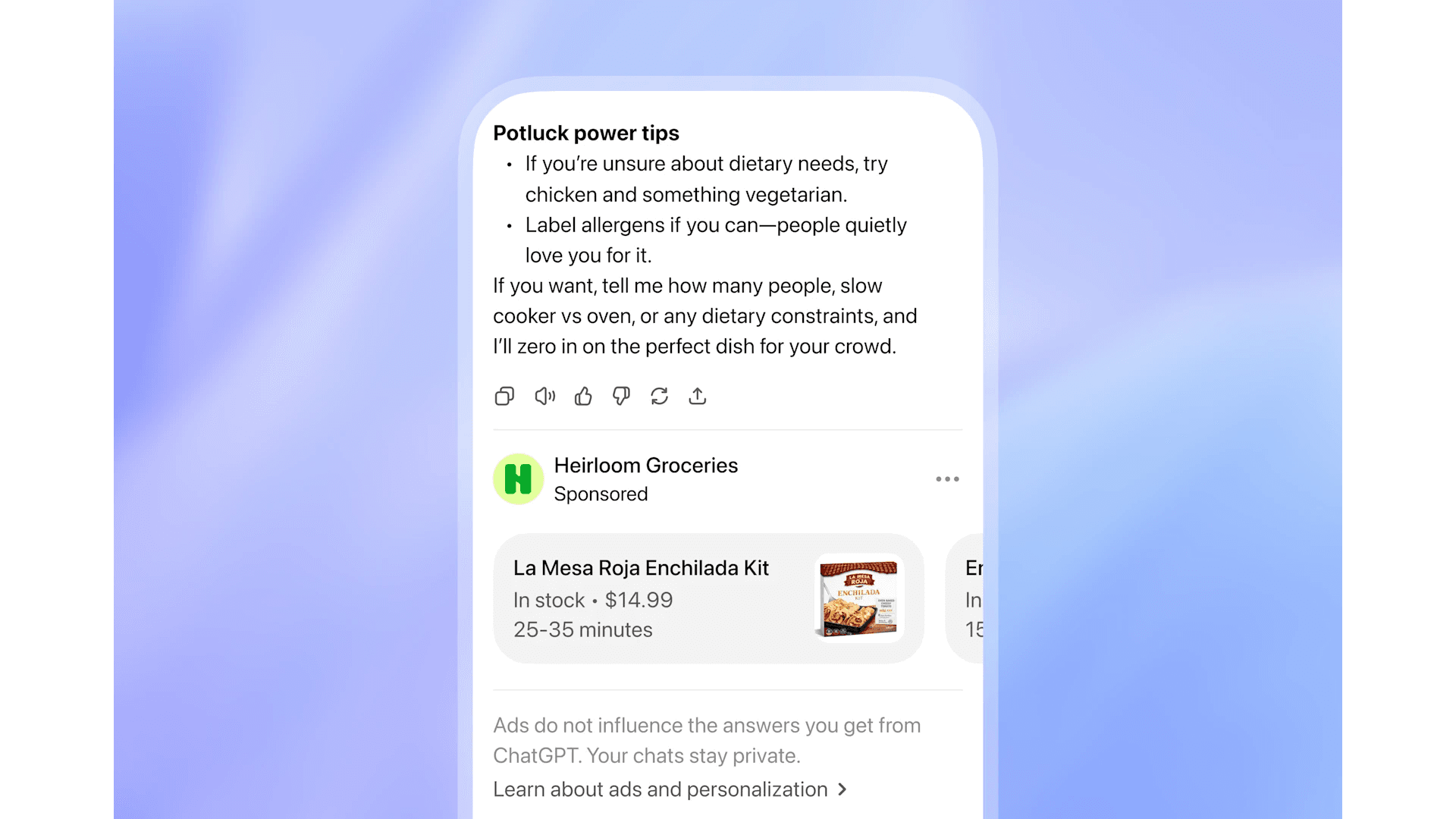
ChatGPT Ads appear clearly labelled sponsored cards placed below the AI-generated response. Importantly, advertisements do not influence or change the content of the response itself.
During the European launch, ad selection will, by default, operate without personalization. Under GDPR regulations, personalized targeting requires explicit user consent. Without consent, ad relevance is primarily determined by the context of the current conversation, supplemented by limited signals such as general location and device type. Previous conversations and other historical user information are not used.
For brands, this means success will depend less on audience profiles and more on understanding the questions, needs, and decision journeys consumers bring into AI conversations.
Early results are promising
One of the biggest concerns surrounding AI advertising has been whether ads would feel intrusive within a conversational experience. Early results suggest that users may be more receptive than initially expected.
When ChatGPT Ads launched in the UK earlier this year, several advertisers reported click-through rates above their expectations.
"The feedback we've seen suggests that users perceive the ads as a natural extension of the conversation rather than an interruption," says Casper Dumont.
"That was one of the biggest questions surrounding advertising in AI-generated environments. The early indicators suggest there's genuine potential, and now European brands will have the opportunity to test that for themselves."
Why traditional search-thinking doesn't apply
While ChatGPT Ads may feel similar to search advertising at first glance, user behaviour is fundamentally different.
The targeting model is built around conversational context rather than keywords. Users aren't simply searching for answers; they're exploring possibilities, comparing alternatives, and seeking guidance.
As a result, marketers will need to rethink familiar search strategies.
"The most important thing to understand is that ChatGPT users behave differently from Google users," says Daniel Sivertsen, Executive Director and Head of Paid Media at iProspect.
"Brands need to move beyond a keyword mindset and learn how to engage consumers through the questions they're asking and the problems they're trying to solve. The companies that master that shift early will gain a significant advantage."
The AI discovery opportunity
As consumer discovery increasingly shifts toward AI-powered platforms, brands must consider both their paid and organic visibility within AI ecosystems. Success will require a stronger understanding of how users interact with large language models, how brands appear in AI-generated responses, and how conversational journeys influence purchasing decisions.
There is also growing evidence that AI-driven discovery may attract particularly valuable audiences. Research from Adobe, highlighted by Reuters, found that traffic originating from AI-powered referrals generated 53% higher revenue per visit for retail websites compared with traffic from other sources.
While the AI advertising landscape is still in its early stages, one thing is already clear: conversational AI is becoming an increasingly important touchpoint in the customer journey.
Want to explore ChatGPT Ads?
The European launch of ChatGPT Ads presents a unique opportunity for brands to experiment with a completely new advertising environment and engage consumers at a critical decision-making moment.
If you'd like to learn more about how ChatGPT Ads could fit into your marketing strategy, feel free to get in touch with us:
Casper Dumont
Executive Director, iProspect
📧 casper.dumont@iprospect.com
Daniel Sivertsen
Executive Director & Head of Paid Media, iProspect
📧 daniel.sivertsen@iprospect.com