For decades, search engine optimisation (SEO) has revolved around a simple premise: identify the right keywords, create content targeting them, and earn visibility on the search engine results page.
Yet now, the way people search is changing.
Generative AI is reshaping the search experience - shifting it away from traditional keyword queries and towards conversational, AI-generated answers. Instead of scanning a list of blue links, users are increasingly presented with summarised responses generated by AI systems that synthesise information from multiple sources.
The familiar keyword-first SEO playbook is no longer sufficient on its own. To remain visible in AI-driven search environments, brands need to rethink how SEO works in a world where answers - not links - are becoming the primary interface.
So, are keywords really dying? Not quite. But their role is evolving.
From keywords to conversations: a new search behaviour
Traditional search behaviour was built around brevity. Users typed short, fragmented queries such as “best running shoes” or “SEO strategy tips”, leaving search engines to interpret the intent behind them.
Generative AI search flips this behaviour. Users now ask longer, more conversational questions, expecting detailed answers rather than a list of websites. AI-powered search engines interpret meaning, context and relationships between ideas rather than simply matching keywords on a page.
Google’s AI-generated search experiences are already appearing across a growing number of queries, with some estimates suggesting generative summaries show for around 13-18% of searches.
This shift changes how visibility works. Ranking for a keyword is no longer the only goal - brands must also become sources that AI systems trust and reference when generating answers.
In other words, SEO is evolving from keyword optimisation to knowledge optimisation. You can read more about how SEO must work as part of a wider connected system, here.
Traditional keyword strategies are under pressure
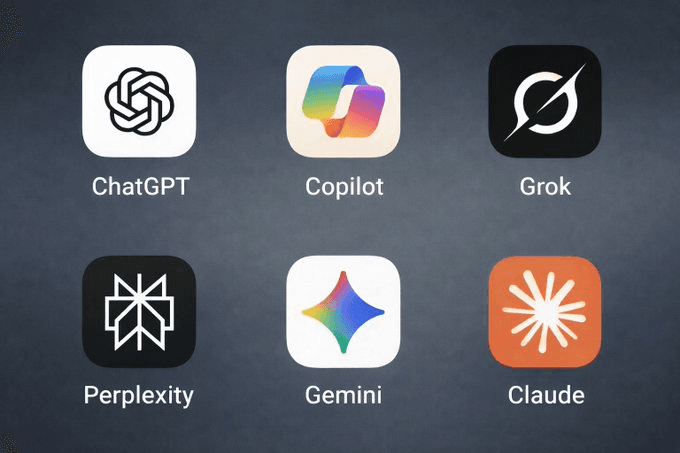
Keywords aren’t disappearing; their role is changing. Large language models (LLM’s), such as ChatGPT and Google’s Gemini, interpret semantic meaning, context, intent and topic authority alongside the keywords themselves to provide responses that demonstrate deeper expertise and contextual relevance.
As a result, we are seeing a sharp increase in the rise of zero-click search behaviour, where users are receiving the answers they’re looking for directly in the search engine results page (SERPs) – without having to click through to further website landing pages.
Consequently, brands can no longer rely on traditional metrics (page views, bounce rates, click-through-rate etc.) to assess the effectiveness of their content. Instead of just aiming to rank on page one, success now also comes from being cited as a source by AI platforms – meaning your content gets surfaced in synthesised AI responses.
You can read more about these changes in our Search Experience Optimization blog.
New ranking signals in the era of generative search optimisation
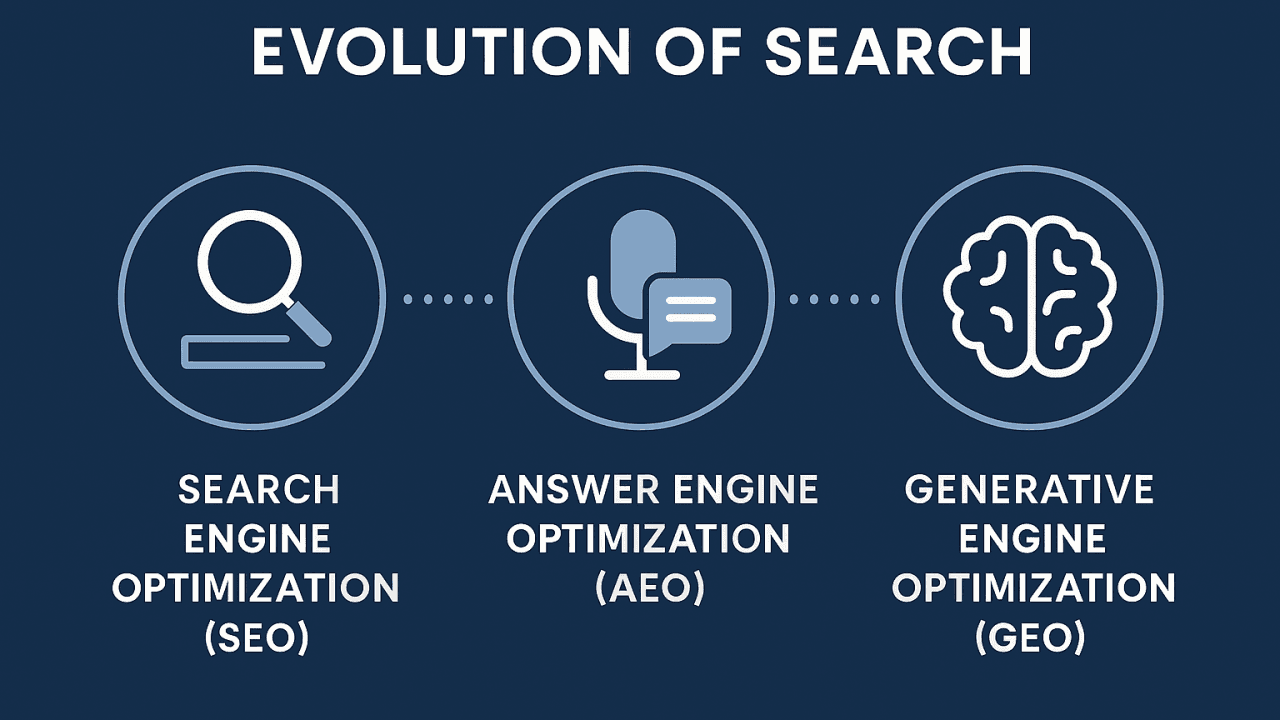
It’s clear that SEO is entering a new phase – one that goes beyond keywords and rankings, and instead focuses on how content is understood, synthesised and surfaced by AI. Sometimes referred to as Generative Engine Optimisation (GEO), the shift we are seeing now requires brands to focus on creating content that is not only discoverable, but genuinely useful, structured and authoritative enough to be cited in AI-generated responses.
Now, more than ever, high-quality content must be created with a focus on:
· Clear, structured explanations
· Strong topical authority
· Credible references
· Unique insight/ original analysis
· Internal linking
· Genuine expertise
Ironically, as AI-generated content becomes easier to produce, it’s human expertise that’s becoming more valuable. Insight-led content that introduces new perspectives, original research and unique, strategic viewpoints is far more likely to be cited by generative search engines.
In many ways, this new AI-era is bringing SEO back to its original purpose – creating genuinely useful content for users.
SEO isn’t dying – it’s evolving
This widespread idea that generative AI will ‘kill SEO’ is an oversimplification. What we’re witnessing is a shift into the next evolution of search.
SEO has always adapted to new technologies – from algorithm updates and mobile-first indexing to voice search. Generative AI just represents another shift, not the end of optimisation itself.
Brands that succeed in this new AI search era will be those that move beyond narrow keyword strategies, and instead focus on authority, clarity and insight. That means:
· Building topical authority across subject areas
· Creating content designed to answer longer form queries
· Structuring information so AI systems can easily interpret it
· Producing original thinking that machines cannot replicate
The future of SEO isn’t about abandoning keywords entirely. It’s about recognising that keywords are now just one piece of a larger puzzle. As generative AI continues to transform how people search, the most effective SEO strategies will prioritise knowledge, credibility and meaningful content. In a world where AI can generate answers instantly, the brands that win will be those whose expertise powers those answers in the first place.
If you’d like to discover more thinking from us, take a look at our UK Media Predictions 2026 report, impact of AI on consumer behaviours 2026. Or, if you’d like to read more about the impact of AI on consumer behaviours.